ENVIRONMENT
It includes all living (biotic) like humans, plants and non-living (abiotic) like air, water and soil etc.
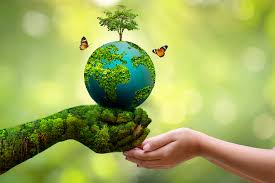
NATURAL ENVIRONMENT
Natural environment means which can be made by nature on its own.
like rivers, climate, weather etc.
COMPOSITION
Earth has 4 spheres
- Lithosphere
- Hydrosphere
- Atmosphere
- Biosphere
Earth has 6 layered structure
1. Inner core 2.Outer core 3. Lower mantle 4. Upper mantle
- Lithosphere
- Crust
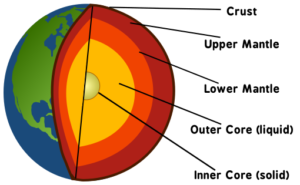
Earth has 6 layered structure Geological activity
Lithosphere is outer surface of planet.
Water on Earth
OCEANS
Ocean has saline water. 71% surface has been covered by water.
There are many oceans like
- Pacific Ocean
- Atlantic Ocean
- Indian Ocean
- Artic Ocean
- Southern Ocean
RIVERS
Rivers have natural freshwater, it not like ocean.
Rivers are the living veins of the hydrological cycle.
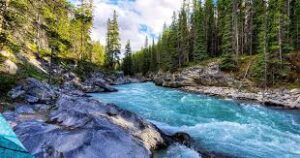
Their waters gather from the sky’s rainfall, rushing down as surface runoff, seeping quietly through groundwater recharge, bubbling forth from hidden springs, and melting away from glaciers and snowpacks that release their frozen reserves.
LAKES
Lake – A Hidden Jewel of the Earth
A lake (from the Latin lacus) is nature’s quiet masterpiece—an expanse of water cradled within the land, resting in a basin carved by time. It is not the restless sea, nor the modest pond, but something grander: deeper, broader, and self-contained. A lake is defined by its inward embrace, a body of water that belongs wholly to the land, set apart from the ocean’s endless reach, and distinguished from a pond by its greater depth and scale.
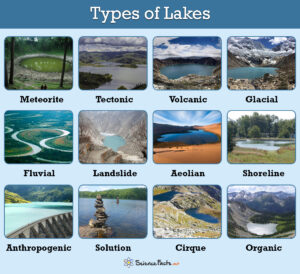
The Story of Earth’s Natural Lakes
Natural lakes are Earth’s quiet sanctuaries, most often born in rugged mountain landscapes, deep rift zones, or regions where glaciers still linger—or have only recently retreated. Others emerge in endorheic basins, where water has no escape, or along the abandoned pathways of ancient rivers.
In certain corners of the world, countless lakes remain as echoes of the last Ice Age, preserved by flawed drainage patterns that time never fully corrected. Yet, despite their beauty and seeming permanence, every lake is only a temporary guest on the geological timescale. Slowly, inevitably, they will fill with sediment or spill beyond the basins that cradle them, fading into the larger story of Earth’s restless surface.
PONDS
Pond – A Quiet Reservoir of Stillness
A pond is a source of still water, whether shaped by nature or crafted by human hands, and it is usually smaller than a lake. Many human-made water bodies fall under this category: ornamental water gardens designed for beauty, fish ponds built for commercial aquaculture, and even solar ponds engineered to store thermal energy.
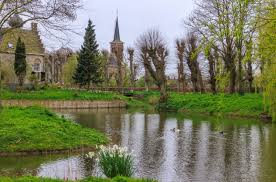
Unlike rivers, ponds and lakes are defined not by swift currents but by subtle movements. In rivers, the flow is visible and constant; in ponds and lakes, currents whisper—tiny thermal micro-currents and gentle wind-driven medium currents ripple beneath the surface. These delicate traits set ponds apart from other watery realms such as stream pools or tide pools, giving them their own quiet identity in the landscape of Earth’s waters.
Atmosphere, climate and weather
Earth’s Atmosphere – The Guardian Veil of Life
The atmosphere of Earth is not just a blanket of gases; it is the planet’s silent architect, sustaining ecosystems and shielding life. Held in place by gravity, this delicate layer wraps the globe like an invisible skin.
Filtered air carries faint signatures of other chemical compounds, while unfiltered samples reveal nature’s hidden fingerprints: dust, pollen, spores, sea spray, volcanic ash, and even meteoritic particles. Human industry adds its own imprint—chlorine, fluorine compounds, elemental mercury, and sulfur dioxide among them.

Suspended within this airy ocean are water vapor, droplets, and ice crystals, forming the clouds that drift across our skies.
At higher altitudes, the ozone layer performs its vital duty: absorbing ultraviolet radiation that would otherwise shred DNA and threaten life at the surface. By day, the atmosphere softens the Sun’s intensity; by night, it holds warmth close, tempering the extremes of daily temperature swings.
In essence, Earth’s atmosphere is both shield and cradle—a fragile veil that makes the difference between a barren rock and a living world.
